Designing Storage for Outdoor Equipment in Coastal Homes
Coastal living generates a volume and variety of outdoor equipment that most inland homes never contend with. Kayaks, paddleboards, surfboards, fishing gear, bicycles, beach carts, life jackets, wetsuits, and seasonal maintenance equipment all need a home when they are not in use. Coastal homes without a dedicated storage strategy for this equipment end up with gear scattered under decks, leaning against exterior walls, or crowding garage bays that were meant for vehicles. Thoughtful outdoor equipment storage solves an organizational problem while protecting valuable gear from the salt air, UV exposure, and moisture that define the coastal environment.
Why Coastal Conditions Demand Purpose-Built Storage Solutions
Salt air is corrosive to nearly every material used in outdoor equipment construction. Metal components oxidize, fabric degrades, electronic components fail, and adhesives weaken when exposed to sustained marine conditions without protection. UV radiation compounds the damage, breaking down polymer materials, fading colors, and embrittling plastics and rubber components over time.
Equipment stored outdoors in coastal environments without protection experiences accelerated wear that shortens its functional lifespan significantly. A kayak that retails for over a thousand dollars loses structural integrity and resale value quickly when stored on exposed ground or lashed to an exterior rail. Purpose-built storage that shields gear from direct sun, salt air, and moisture preserves equipment performance and extends the interval between costly replacements.
Integrating Outdoor Storage into Coastal Homes
The most effective outdoor equipment storage in coastal homes is designed into the structure from the beginning rather than retrofitted after the fact. Storage spaces built under elevated decks, within covered carport bays, or as attached outbuildings integrate seamlessly with the architecture of the home and provide weather protection without the visual clutter of freestanding sheds and racks.
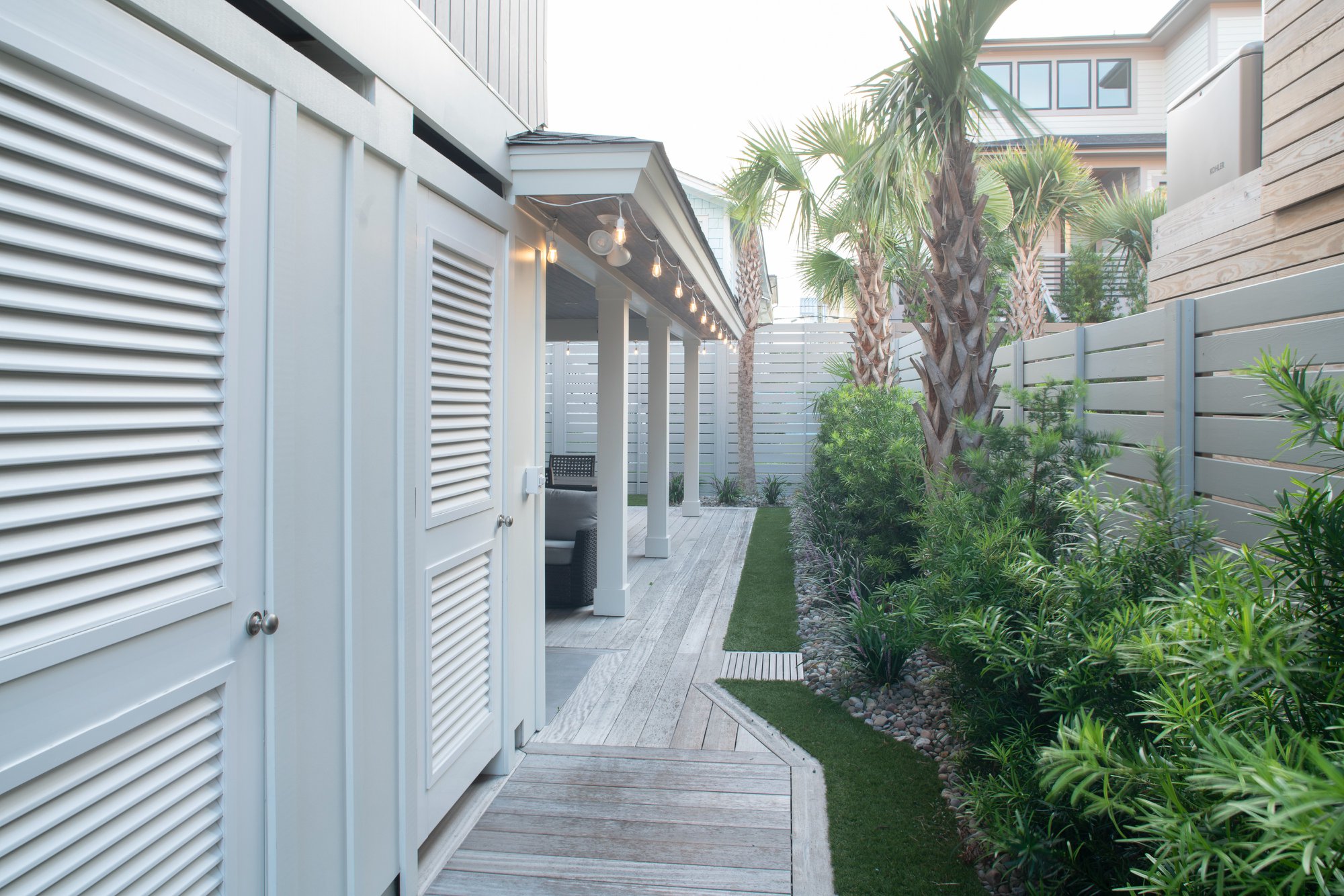
In Wilmington, NC, where homes in waterfront neighborhoods often sit on elevated foundations, the ground-level space beneath the living floor is a natural candidate for enclosed or semi-enclosed storage. This below-deck area can be finished with weather-resistant siding, louvered ventilation panels, and secure doors to create a purpose-built equipment bay that keeps gear organized and out of the elements. When designed as part of the original construction, this space costs a fraction of what a separate outbuilding would require.
Sizing Storage Spaces for the Equipment Coastal Homes Accumulate
Storage space that seems generous at move-in tends to fill faster than homeowners anticipate. Coastal households accumulate gear gradually, and equipment categories expand as family members pursue different activities over time. A realistic storage plan accounts not just for current equipment but for the likely growth of that inventory over the first several years of ownership.

Kayaks and paddleboards require horizontal or vertical rack systems that keep hulls off the ground and clear of wall surfaces that could cause pressure points over time. A single tandem kayak is 14 to 18 feet long, which means the storage bay accommodating it must provide clear horizontal depth or adequate ceiling height for vertical wall-mounted storage.
Bicycles hung vertically on wall-mounted hooks require approximately 24 inches of wall width per bike. Mapping out the actual dimensions of the equipment to be stored before finalizing the storage space design prevents the frustrating situation of a purpose-built space that cannot accommodate the gear it was intended to hold.
Ventilation: A Non-Negotiable Feature in Coastal Homes
Enclosed storage in coastal environments requires deliberate ventilation design. Sealed spaces trap the moisture that equipment brings in from the water, the humid coastal air that flows in with every door opening, and the condensation that forms on cold surfaces during seasonal temperature swings. Without airflow, this moisture creates mold on fabric gear, accelerates corrosion on metal components, and damages any wood elements within the storage space itself.
Louvered vents positioned at both low and high points in the storage enclosure create a natural convective airflow that continuously exchanges interior air with drier exterior air. Powered exhaust fans provide more aggressive moisture control in fully enclosed spaces or in climates where passive ventilation alone is insufficient. The ventilation investment is modest during construction and far less expensive than replacing mold-damaged equipment or remediating a moisture problem in a finished storage space.
Wall and Ceiling Storage Systems That Maximize Coastal Home Storage Capacity
The floor area of any storage space is only a fraction of its total capacity when walls and ceilings are treated as usable storage surfaces. Heavy-duty wall-mounted track systems with adjustable hooks, brackets, and shelving allow the storage layout to be reconfigured as the equipment inventory changes over time.
Ceiling-mounted pulley systems lift kayaks, canoes, and paddleboards overhead, freeing the floor entirely for other gear. Pegboard panels and slotted wall systems organize smaller equipment such as fishing tackle, snorkeling gear, tools, and water sports accessories in a way that keeps everything visible and accessible without consuming shelf or floor space.
In larger storage bays, a combination of ceiling racks for large items, wall tracks for medium equipment, and floor-level shelving or cabinetry for bins, bags, and seasonal gear creates a layered system that holds a surprising volume of equipment in an organized, retrievable way.
Material Selection for Coastal Storage Structures
The materials used to build and finish outdoor storage structures in coastal homes must withstand the same environmental stressors as the rest of the home's exterior. Standard interior-grade materials degrade rapidly in marine conditions. Pressure-treated lumber rated for ground contact is the appropriate choice for framing elements in exterior storage bays.
Exterior-grade plywood or cement board sheathing provides a dimensionally stable substrate for weather-resistant cladding. Hardware, including hinges, latches, screws, and anchor fasteners, should be specified in stainless steel or hot-dipped galvanized finishes to resist salt air corrosion.

Flooring within the storage bay benefits from a concrete slab with a sealed surface or composite decking that resists moisture, staining, and the weight of heavy equipment. These material choices add modest cost during construction and prevent the premature replacement of storage components that inferior materials would require.
Lighting and Security in Coastal Outdoor Storage
A well-designed storage space is also a lit and secured one. Motion-activated LED lighting inside storage bays eliminates the frustration of searching for equipment in a dark space and provides a practical deterrent against casual theft.
Waterproof LED fixtures with sealed housings perform reliably in the humid coastal environment without the corrosion and failure that standard fixtures experience over time. Lockable doors with marine-grade hardware protect high-value equipment from opportunistic theft, which is a realistic concern in vacation-destination coastal communities.
For storage spaces accessible from the exterior of the home, a keypad or smart lock system provides convenient access without the management burden of physical keys for family members and houseguests.
Building Storage That Works as Hard as Your Equipment Does
At Konrady & Son Construction, we design and build custom homes and renovations across Wilmington, NC, that treat every square foot as an opportunity to improve how our clients live. Our team has built dedicated equipment storage into elevated foundations, attached outbuildings, and garage structures throughout the coastal communities we serve.
We understand the gear that coastal households accumulate and the conditions that storage spaces must withstand, and we bring that knowledge to every detail of the design. Connect with us today.