Energy-Efficient Building Practices for Coastal Homes
Building near the coast brings natural beauty and daily comfort, but it also introduces environmental demands that shape how homes should be designed and built. Energy-efficient coastal homes rely on thoughtful construction practices that balance sustainability, durability, and livability. When efficiency is addressed early, coastal homes can reduce energy use, improve comfort, and stand up better to heat, humidity, and weather exposure.
Energy efficiency by the coast is not about adding technology late in the process. It is about aligning materials, systems, and design choices so the home performs well year after year.
Why Energy-Efficient Coastal Homes Require a Different Approach
Coastal climates create unique efficiency challenges. Heat, humidity, wind, and salt air all influence how a home gains and loses energy. Energy-efficient coastal homes must manage moisture and airflow as carefully as temperature.
Homes that are not designed for these conditions often rely heavily on mechanical systems to stay comfortable. This leads to higher energy use and increased wear on equipment. A performance-focused approach reduces that strain by controlling how the home responds to its environment.
Efficiency becomes most effective when it is integrated into the structure rather than layered on afterward.

Insulation Strategies for Energy-Efficient Coastal Homes
Foam insulation plays a central role in energy-efficient coastal homes by controlling both heat transfer and air movement. When properly installed, foam insulation creates a more continuous thermal barrier while reducing unwanted air leakage that can introduce heat and humidity.
In coastal environments, this combination of insulation and sealing helps stabilize indoor temperatures, limit condensation, and protect building materials over time. Energy-efficient coastal homes perform best when insulation is integrated into a whole-home sealing strategy rather than treated asa standalone layer.
Building Envelope Design and Air Sealing
The building envelope defines how well a home separates indoor living space from outdoor conditions. In energy-efficient coastal homes, air sealing is just as important as insulation.
Gaps around windows, doors, and penetrations allow humid air to enter and conditioned air to escape. Over time, this leads to uneven temperatures and higher energy demand. Proper detailing around these areas improves comfort and reduces reliance on mechanical systems.
A well-sealed envelope also supports durability by limiting moisture intrusion that can damage framing and finishes.
Insulation systems that also limit air movement enhance the effectiveness of the building envelope and reduce reliance on mechanical cooling.
Renewable and Durable Materials for Coastal Efficiency
Material selection influences both sustainability and performance. Energy-efficient coastal homes often incorporate renewable or responsibly sourced materials that also perform well in harsh environments.
Exterior cladding, decking, and trim must resist salt exposure and moisture without frequent maintenance. Interior finishes should support healthy indoor air quality through low-emission products. Durable materials reduce replacement cycles, which lowers long-term environmental impact.
Efficiency and sustainability are closely linked when materials are chosen for longevity.
Windows, Orientation, and Natural Light
Windows play a major role in energy performance and comfort. In coastal settings, strong sunlight and reflective surfaces can increase heat gain if not managed properly.
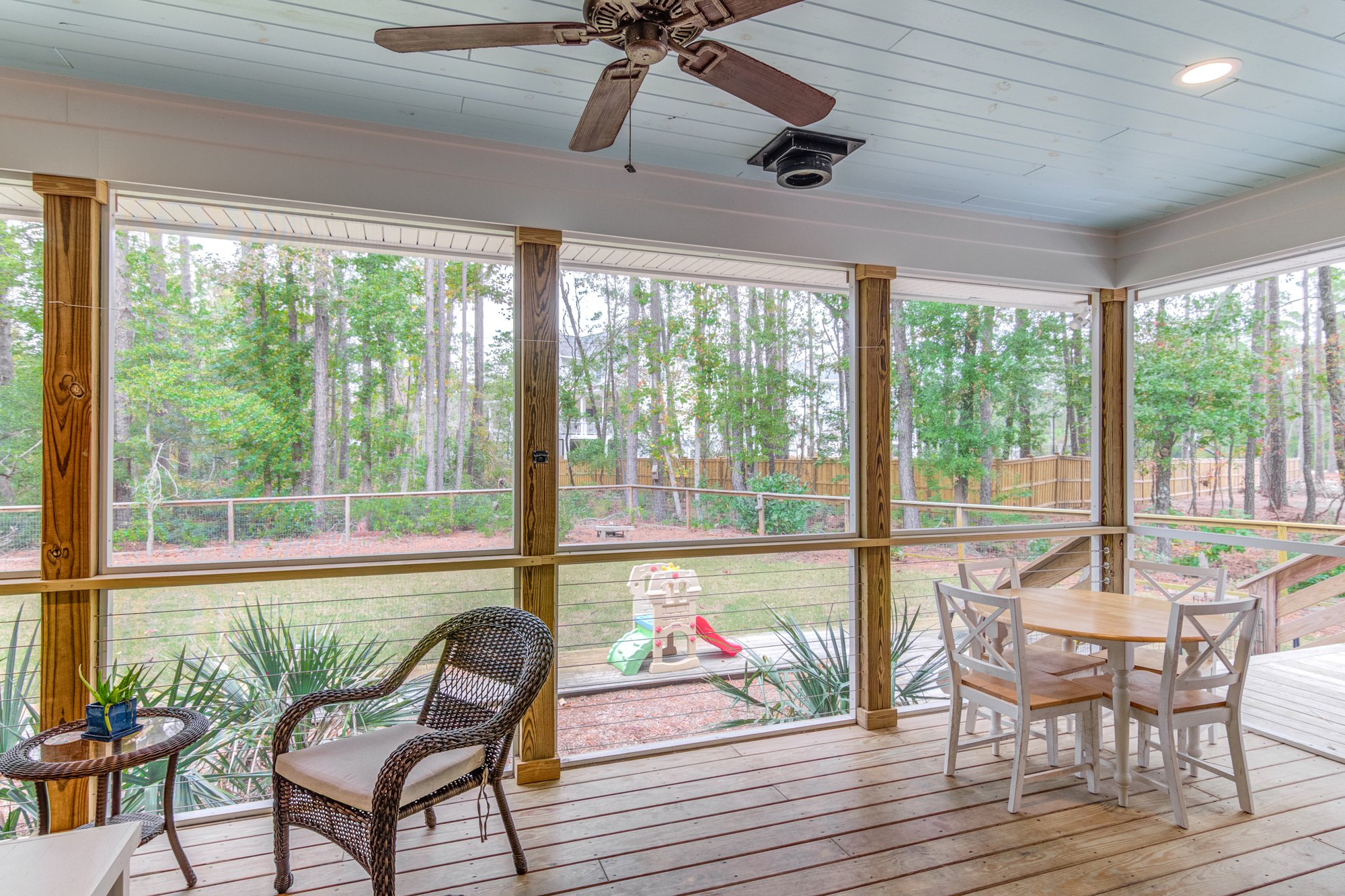
Energy-efficient coastal homes use window placement and glazing strategies to balance light and heat. High-performance glass reduces unwanted heat gain while maintaining views and daylight. Shading elements such as overhangs and covered porches further support passive cooling.
Thoughtful orientation allows homes to take advantage of natural light without sacrificing efficiency.
Smart Systems in Energy-Efficient Coastal Homes
Technology supports efficiency when it is applied intentionally. Smart thermostats, zoning systems, and energy monitoring tools allow homeowners to manage comfort more precisely.
In coastal homes, smart systems help adjust to changing humidity and temperature conditions throughout the day. Properly sized HVAC systems paired with intelligent controls reduce cycling and energy waste.
Efficiency improves when systems respond to actual conditions rather than operating at fixed settings.
Ventilation and Indoor Air Quality
Ventilation is essential in energy-efficient coastal homes, especially where humidity levels remain high. Controlled ventilation systems provide fresh air without introducing excess moisture.
Balanced ventilation supports indoor air quality while protecting the home’s envelope. This approach reduces mold risk and improves comfort without compromising efficiency.
Ventilation strategies work best when coordinated with insulation and air sealing decisions.
In tightly sealed homes, intentional ventilation becomes essential to balance efficiency with healthy indoor air quality.
Renovations and Energy Efficiency Upgrades
Existing coastal homes can benefit significantly from energy-focused renovations. Upgrading insulation, sealing air leaks, and replacing outdated systems often deliver immediate comfort improvements.
Renovation planning should consider how new components interact with existing structures. Energy-efficient coastal homes result when upgrades address root causes rather than surface symptoms. Targeted improvements can transform how a home feels and performs without requiring a full rebuild.

Energy Efficiency and Storm Resilience
Efficiency and resilience often go hand in hand. Homes designed to control air and moisture tend to perform better during storms.
Energy-efficient coastal homes with tight envelopes and durable materials are less vulnerable to wind-driven rain and pressure changes. These features reduce damage potential and support quicker recovery after severe weather events. Resilient efficiency protects both the structure and the people living inside.
Long-Term Value of Energy-Efficient Coastal Homes
Efficiency delivers value beyond monthly energy savings. Homes that maintain consistent comfort, manage moisture effectively, and reduce system strain tend to age more gracefully.
Over time, reduced maintenance, lower operating costs, and improved durability support both livability and resale value. Energy-efficient coastal homes remain adaptable as standards and expectations evolve.
Building Smarter Along the Coast
Energy-efficient building practices allow coastal homes to work with their environment rather than against it. When insulation, materials, systems, and design decisions align, efficiency enhances comfort instead of limiting it.
At Konrady & Son Construction, we integrate energy-efficient practices into custom homes, renovations, property services, and storm protection planning. Our approach focuses on long-term performance so coastal homes remain comfortable, resilient, and efficient for years to come. Send us a message today.